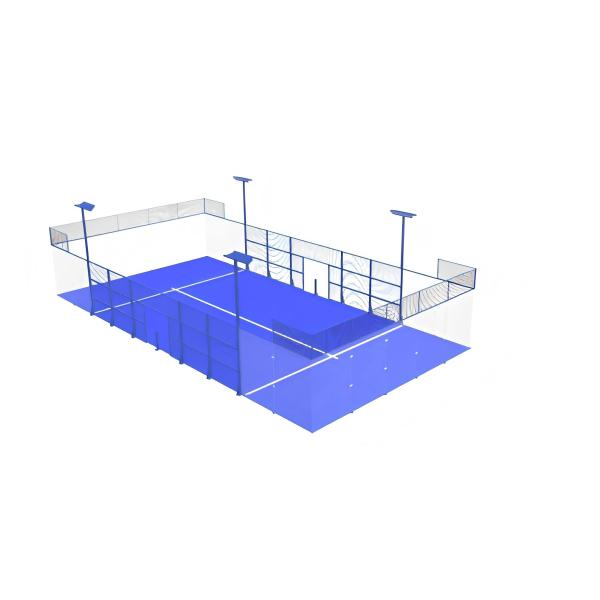
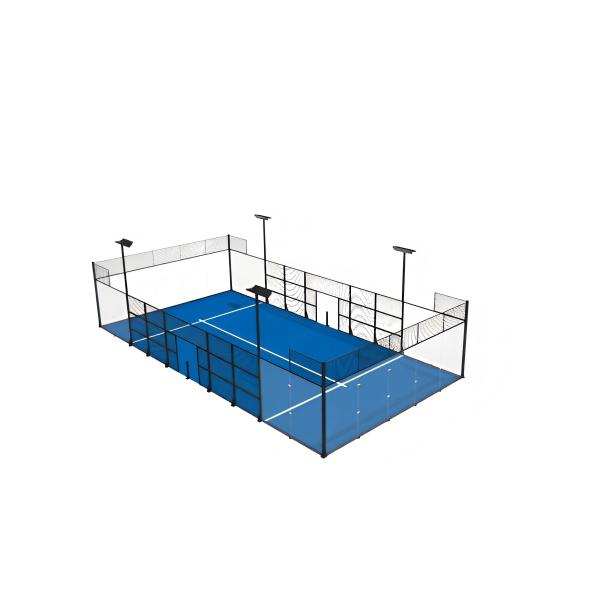
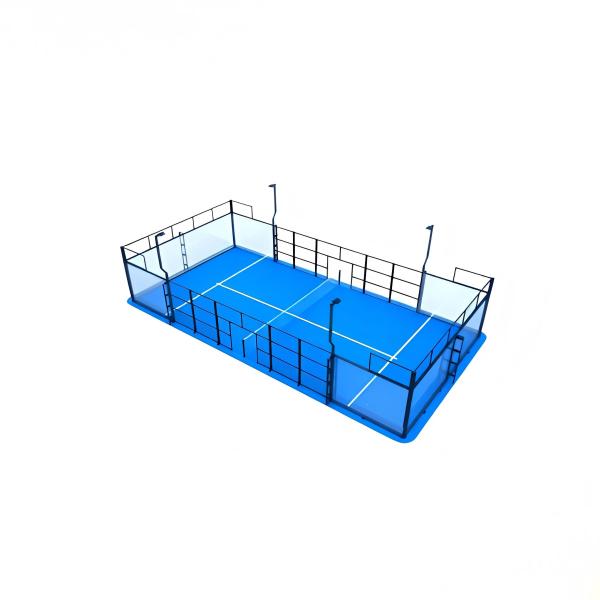
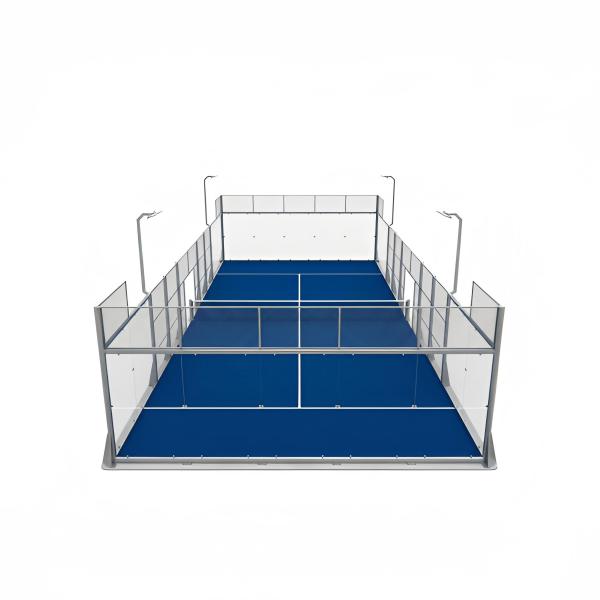
A covered padel court generally costs more than an open court because the project adds a roof structure, foundations or anchoring for the canopy, wind and sometimes snow-load engineering, drainage considerations, and additional installation work. The price difference depends on whether the project uses a simple single-court canopy, a retractable roof, an integrated roof system, or a fully enclosed indoor facility. Buyers comparing Rayjun padel court and canopy solutions should compare the complete installed project cost rather than the court-kit price alone.
What Does a Covered Padel Court Cost More to Build?
The cost difference comes from the additional structure and the engineering needed to support it safely.
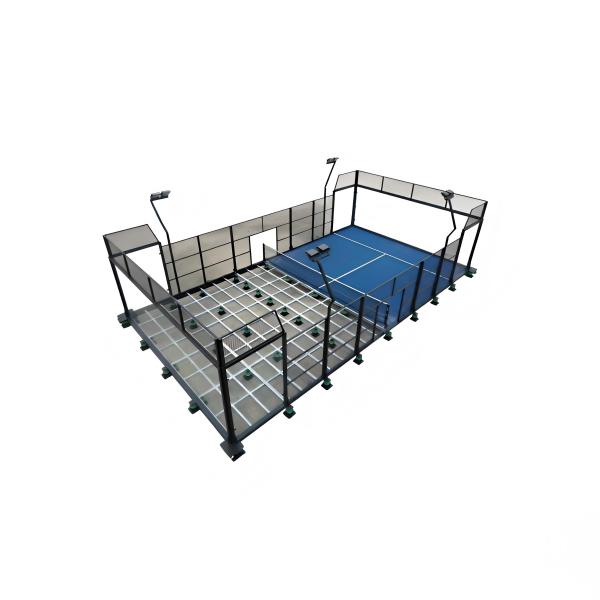
An open court typically includes the steel frame, glass panels, artificial turf, net, lighting if required, foundations, drainage, freight, and installation. A covered court adds some or all of the following:
-
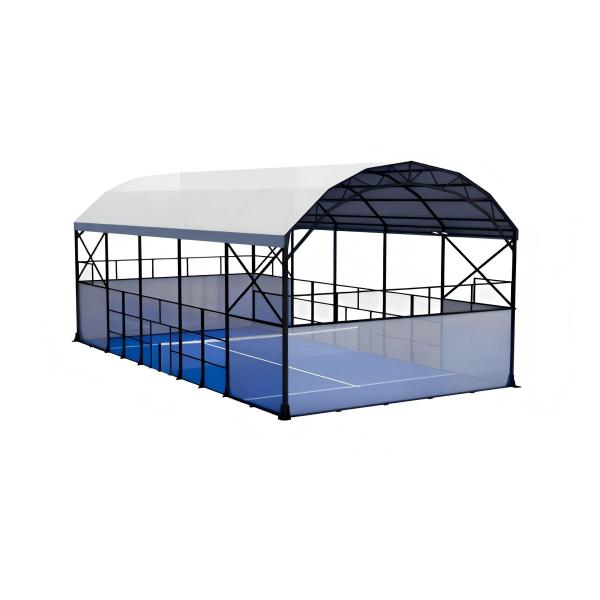
Roof steel structure and roofing materials.
-
Additional structural calculations and connection details.
-
Foundations, anchor systems, or reinforced support points.
-
Wind-load and, where applicable, snow-load engineering.
-
Roof drainage and rainwater discharge.
-
Additional lifting equipment and installation labor.
-
Lighting modifications to compensate for the roof and shadows.
-
Possible side screens or rain protection.
A roof is not simply a sheet of material installed above an existing court. The support system must be designed for the site's conditions, including wind exposure, roof geometry, and local building regulations.
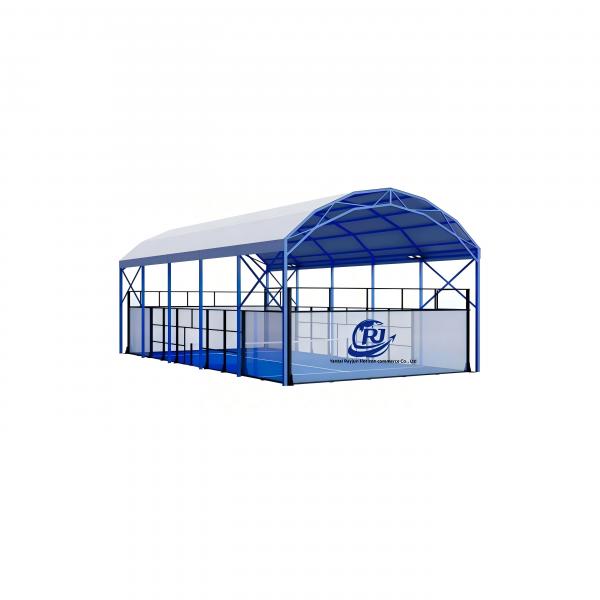
Rayjun lists a single-court canopy with a published nominal size of 10 m × 20 m and a Q235 steel structure. This is a product specification, not a complete project quotation or confirmation that the canopy is suitable for every local wind or snow condition. Buyers should confirm the structural design, dimensions, and included components for their project.
See the Rayjun Single Padel Court Canopy for the published product details.
How Much More Can a Covered Court Cost Than an Open Court?
There is no universal percentage because published prices may describe very different scopes of supply.
For example, a quotation may cover only the court kit, while another may include foundations, drainage, electrical work, freight, and installation. Comparing these figures without adjusting the scope can make the covered option appear more or less expensive than it actually is.
A useful reference comes from UK project-cost information published by Playskan using Lawn Tennis Association guidance for 2025. Its published figures show approximately £71,000 for a single uncovered court project and £166,000 for a covered court, including the additional canopy and associated work. This example represents a specific UK project-cost basis, not a universal international price or a direct quotation for a Rayjun system.
For a separate market comparison, review the 2026 padel court cost guide, but verify the scope and assumptions before using any published figure in a project budget.
Which Costs Should Buyers Compare?
| Cost item | Open court | Covered court |
| Steel frame and glass enclosure | Required | Required |
| Playing surface and net | Required | Required |
| Base and foundations | Required, subject to site conditions | Required, with possible additional structural requirements |
| Lighting | Depends on operating hours | May require additional design for roof height and shadows |
| Roof structure and roofing | Not required | Required |
| Wind and snow-load design | Required as applicable to the court | Required for the court and roof structure |
| Roof drainage | Not required | Required |
| Freight and lifting | Depends on project | May increase with larger structural components |
| Installation labor | Depends on site and scope | Often higher because of the additional structure |
| Permits and engineering | Depends on jurisdiction | May involve additional building approvals |
The table describes typical cost categories, not fixed inclusions. Confirm each item in the supplier's quotation and the local contractor's proposal.
When Is a Covered Padel Court Worth the Additional Investment?
A covered court may be commercially attractive when rain, strong sun, or seasonal weather regularly interrupts bookings. It can extend the usable playing schedule, protect some court components from direct weather exposure, and provide a more predictable customer experience.
However, a canopy does not automatically create a fully indoor environment. Wind-driven rain, humidity, temperature, and condensation can still affect play, while an open-sided canopy provides less environmental control than an enclosed hall.
An open court may be more suitable when the site has a favorable climate, the investment budget is limited, and the operator can accept weather-related interruptions. It may also be preferable when planning permission or the site's structural conditions make a roof difficult to install.
Which Roof Configuration Should You Choose?
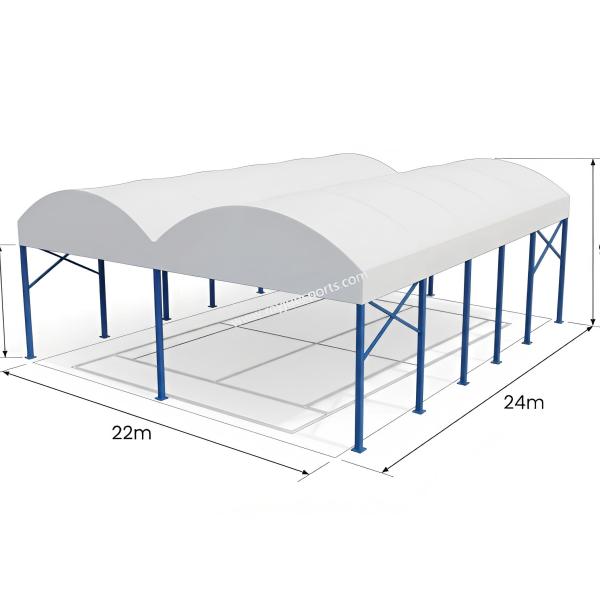
Rayjun's product range includes single-court canopies, double-court canopies, retractable canopy options, and integrated roof courts.
Configuration
Potential application
Main purchasing consideration
Open court
Outdoor clubs and recreational facilities
Weather-related downtime
Single-court canopy
A facility covering one court
Structural cost and site clearance
Double-court canopy
Multi-court clubs with shared covered space
Span, support arrangement, and construction access
Retractable canopy
Projects seeking adjustable roof coverage
Mechanical complexity and maintenance
| Integrated roof court | Projects designed around a combined court and roof system | Scope of engineering, drainage, and installation |
The correct choice depends on the site's dimensions, weather exposure, operating model, and required level of protection. Buyers should confirm whether the proposed roof covers only the playing area or also provides side protection.
Review Rayjun's padel court product range to compare court and canopy configurations.
How Do Wind, Snow, and Site Conditions Change the Cost?
Wind exposure is particularly important because a canopy introduces a large surface area that can experience significant wind forces. Roof geometry, height, openings, surrounding buildings, terrain, and local design standards influence the structural requirements.
In colder regions, snow accumulation may also govern roof design. Coastal environments can introduce corrosion considerations, while rooftop projects may require a structural assessment of the existing building before any equipment is ordered.
The buyer should provide the project location, applicable design wind speed, snow requirements where relevant, installation height, and available foundation drawings. A supplier's standard product dimensions alone cannot establish compliance with local structural requirements.
For exposed sites, review the Rayjun Wind Resistant Padel Court and request project-specific structural documentation. Do not assume that a wind-resistant court enclosure automatically makes a separately quoted canopy suitable for the same conditions.
How Should Buyers Compare the Total Cost of Ownership?
Initial cost is only one part of the decision. A covered court may require additional inspections, roof drainage maintenance, corrosion protection, and access equipment for repairs.
An open court may have lower initial construction costs but experience more weather-related cancellations or surface-cleaning requirements, depending on the site. Neither option is automatically less expensive over its service life.
Compare the following:
-
Initial equipment and construction costs.
-
Annual maintenance and inspection expenses.
-
Expected weather-related closure hours.
-
Booking revenue and seasonal demand.
-
Roof, lighting, and drainage maintenance.
-
Insurance and local compliance requirements.
-
Expected service life and replacement costs.
A simple financial comparison should use the same operating period and clearly state assumptions. Do not assume that a covered court will generate additional revenue unless the local booking model supports that conclusion.
What Should Buyers Confirm Before Requesting a Quote?
Provide the number of courts, intended location, site dimensions, preferred roof arrangement, required lighting, foundation condition, and local structural requirements.
Also clarify whether the quotation includes the court enclosure, glass, turf, lighting, canopy, freight, unloading, installation, electrical work, drainage, and commissioning. Request a drawing showing the roof supports, clearances, drainage route, and access for maintenance.
Rayjun's padel court inquiry page can be used to submit project requirements for a quotation.
Frequently Asked Questions
Is a covered padel court always more expensive than an open court?
Usually, yes, when the comparison includes the additional roof structure, structural design, and installation. The difference depends on the canopy configuration, site conditions, and the scope included in each quotation.
Can I add a canopy to an existing padel court?
Potentially, but the existing foundations, court layout, structural clearances, and local building requirements must be assessed first. The new roof should not be assumed compatible with the existing court without an engineering review.
Does a covered court eliminate rain-related interruptions?
Not necessarily. A canopy reduces direct rainfall on the playing area, but wind-driven rain, drainage issues, and moisture around the court may still affect play.
Should I choose a single-court or double-court canopy?
A single-court canopy may suit a smaller project or phased development, while a double-court structure may share some structural elements across two courts. Compare total installed cost, span requirements, support locations, and maintenance access before deciding.
What information is needed for an accurate covered-court quotation?
Provide the site location, court count, layout, required roof coverage, wind and snow design criteria, foundation information, and installation scope. These details help the supplier identify the required structure and the work that must be priced separately.
Request a Covered or Open Padel Court Quotation
Rayjun supplies padel court systems and canopy solutions for sports clubs, hotels, resorts, and commercial facilities. Contact Rayjun at andrew@rayjunhorizon.com with your project location, number of courts, preferred roof configuration, and installation requirements to compare suitable open and covered court options.